
FITTING GUIDE
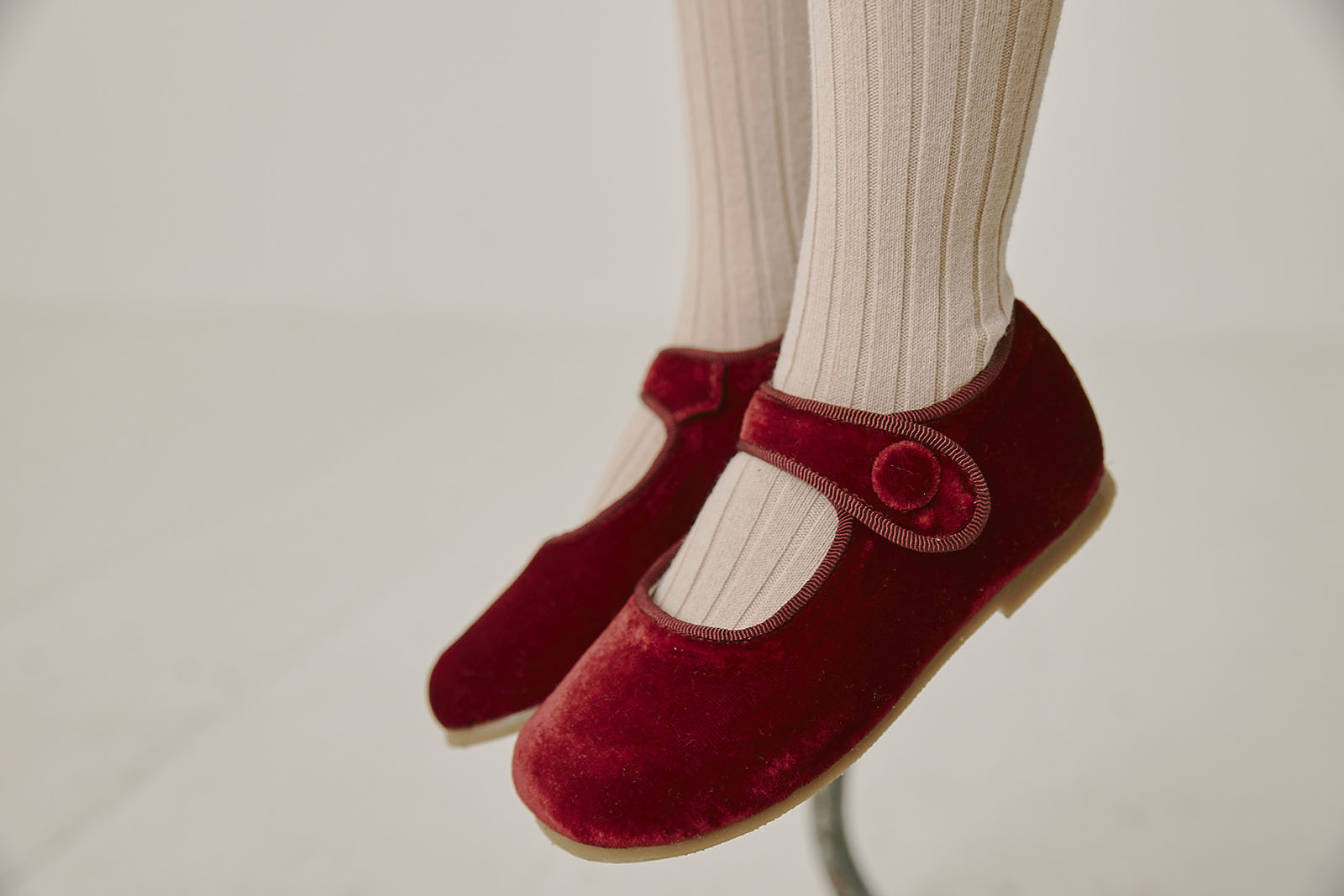
- Ensure your child is wearing the correct thickness socks or tights and that these are not constricting the toes
- Remove all packaging from shoes and open any buckles/velcro so the shoe is fully open
- Slide the shoe onto the foot – sometimes you have to help the foot in gently but it should go on naturally without force
- Do up the laces or buckles – there should not be too much or too little overlapping
- Hold the ankle and give the shoe a tug – it should stay firmly on the foot
- Ask the child to stand up straight with their weight evenly on both feet
- First check there is no space behind the heel – the shoe should sit snugly
- The shoe should also not touch the ankle bone but sit just below it to avoid rubbing
- The widest part of the foot is between the start of the big toe and the start of the baby toe – this part of the foot should be sitting in the widest part of the shoe. Feel gently down the sides of the shoe to check the foot is in the correct position
- The width can be checked by using your thumb and forefinger. Place them at the edge of the widest part of shoe and move them towards each other across the toe of the shoe. The leather should give gently. It does not move at all the shoe is too narrow and if you can pinch the leather very easily it is too wide
- With a T-bar or Mary Jane you should be able to run your finger under the rim of the shoe
- The length can be checked by feeling the position of the big toe – there should be about a thumbs width of growing room at the toe of the shoe
- Ask the child to walk in the shoe – they should not trip or the shoe should not slip at the back
- If a child has been wearing trainers or canvas shoes all summer proper leather shoes will feel a little funny. If buying these as school shoes encourage your child to wear them a little before term starts
- The measurements must be taken on a hard and even floor
- Ensure that your child is wearing the correct thickness of socks or tights for the shoes they will be wearing
- Print out two copies the Papouelli size gauge and place it on the floor – ask your child one foot at a time to stand on the paper. They should stand so that when you put a pencil vertically behind the foot it is on the heel line
- Ensure the toes are sitting straight
- With your pencil completely vertical mark on the paper at the back of the heel, to the longest toe
- The measurement needed is the length between the longest toe and the edge of the paper where the heel was in mm (heel line). It is very usual for one foot to be larger than the other – always work to the largest foot
NB always checks your printer is set to “Scale to Fit” with “Fill entire Paper” otherwise the calibration will not be correct. It’s intended to be printed on A4 format paper.
Please do give us a call when in doubt about which size to order. We can give advise over the phone, about all styles. The phone number is +44 (0)20 7730 6690.
TIPS
Buy shoes with breathable leather uppers. This will give better support and enables the perspiration to escape.
Shoes with a soft flexible upper and sole will allow the natural movement and growth of the child’s foot.
Where possible choose shoes with an adjustable fasting over the instep for a secure fit.
Shoes that are worn so they have uneven soles and heels can also be detrimental to the feet. We would advise that you replace shoes after 5-6 months of every day wear such as school shoes.
We also recommend looking after the shoes – they all benefit from a little polishing to keep the leather soft and supple and replacing the sole and heel if they are worn down can make them literally as good as new.
FACTS
It takes about 18 years for a child’s foot to totally develop.
A baby’s foot will grow faster during the first 3 years than at any other time.
A baby’s foot arch does not develop until age 2/3 years.
70% of foot problems are caused by the wrong footwear or ill fitting shoes and the majority of these were caused during childhood.
At birth a foot contains 22 bones – by school age this will be 45.
Over the next 13 -14 years these will fuse together to create the 26 bones that makes up the adult foot.
It is therefore very important to recognise that a child’s shoes need to be well fitted and supportive not just in the early years but until they are 18 or so.
Every year the average person walks 2500 miles (the equivalent of walking from New York to San Francisco).
The human foot has to cope with that journey year after year.
Look after them!
You should have your child’s foot measured regularly.
First steps 6-8 weeks.
Preschool 2-3 months.
School 3-4 months.
Children do not always grow evenly but in fits and spurts.
We are always happy to check your child’s feet and we will able to tell you if your child has outgrown their shoe or whether they are still fitting well.
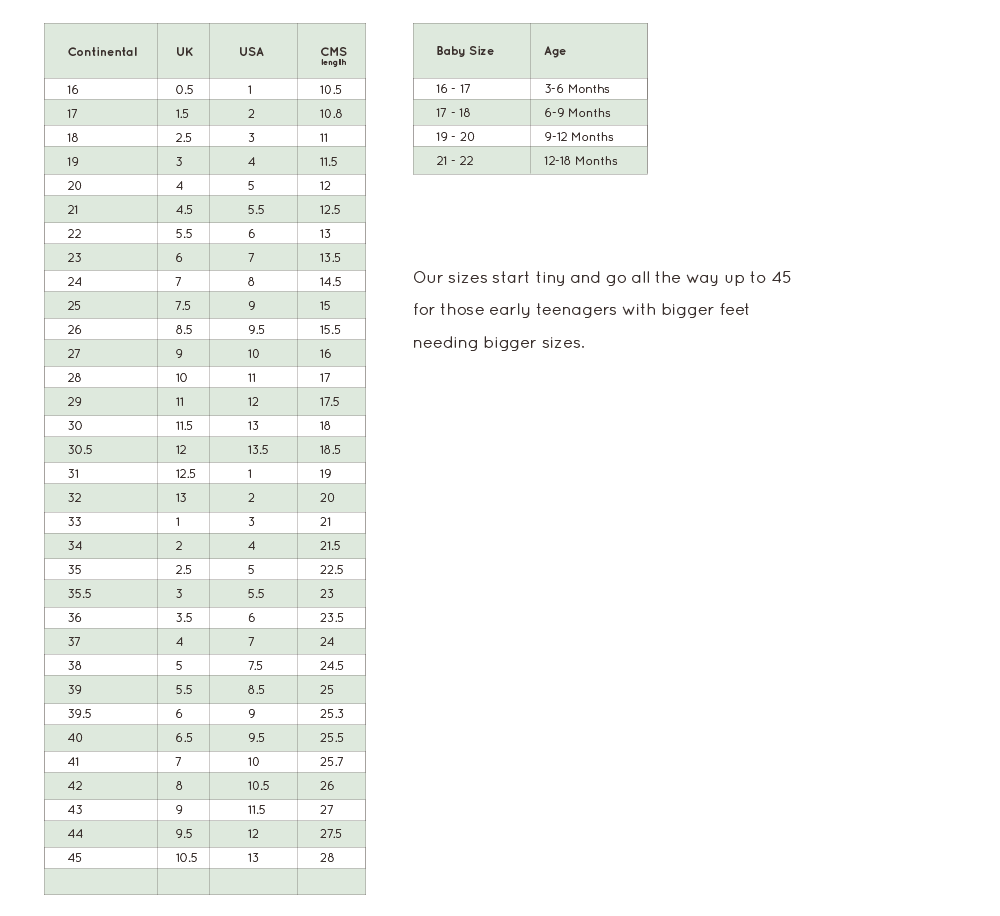
WE ARE VERY HAPPY TO ASSIST YOU OVER THE PHONE WITH MEASURING, FITTING AND HOW OUR DIFFERENT STYLES RUN
PLEASE CALL: +44(0)20 7730 6690 DURING OUR OPENING HOURS